
-
Mail Us
info@rushabhit.com -
Call Us For Details
+91-999-801-5405
Fire Safety and Suppression system
Fire Safety and Suppression system
A fire alarm system is designed to detect the unwanted presence of fire by monitoring environmental changes associated with combustion. In general, a fire alarm system is classified as either automatically actuated, manually actuated, or both. Automatic fire alarm systems are intended to notify the building occupants to evacuate in the event of a fire or other emergency, report the event to an off-premises location in order to summon emergency services, and to prepare the structure and associated systems to control the spread of fire and smoke.
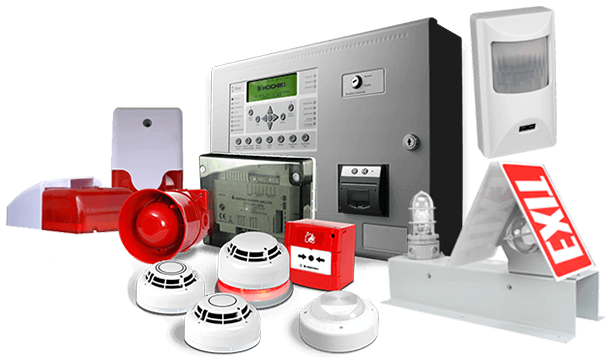
Fire System
Intelligent Addressable: Intelligent Addressable Systems offer benefits in terms of speed of detection, identification of the location of fire and easier maintenance. Intelligent systems also offer tolerance to faults in the system wiring, which allows a single pair of wires to be used to connect up to 200 devices to the system, allowing cost savings in the wiring of large systems.
Conventional: Conventional Fire Alarm System provides the earliest practicable fire detection and warning. This system consists of smoke or heat detectors at designated locations, to detect smoke or heat at the earliest during any outbreak of fire.
Hybrid: The Hybrid Fire Alarm System combines the capabilities of both Intelligent Addressable and Conventional Fire Alarm System.

Fire Suppression systems
- Water Based Systems
- Gas Based Systems.
- Gas Based Systems.
Fire Alarm System
A Fire Alarm Control Panel (FACP), or Fire Alarm Control Unit (FACU), is the controlling component of a Fire Alarm System. The panel receives information from environmental sensors designed to detect changes associated with fire, monitors.
Along with this we are using the Sounder, Call Point, Beacons and panels, PA system to addressing the people, So the people will aware about the fire incident.
According the environment we are selecting the detectors. Below the detectors are commonly used in Buildings, Schools, Business and other highly secure locations.
- Smoke Detector
- Heat Detector
- Multi Criteria Detector
- Multi Criteria Detector
Alliance



Rushabh IT Infrastructure Services is leading specialized systems integration company.
Rushabh IT Infrastructure is India based IT Infrastructure Solutions & Services provider in the field of Information Communication and Technologies [ICT] and major deal in IT Infrastructure projects.
RUSHABH IT INFRASTRUCTURE SERVICES 2018. All right reserved.